Tag Archives: Digital Nomad

How to Build a Career as a Digital Nomad and Actually Live the Life


Photo by Freepik

The idea of working from anywhere is appealing to more people than ever. For many, becoming a digital nomad offers the chance to build a flexible career while exploring new places. But turning that idea into reality takes more than just a plane ticket and a laptop. You’ll need a dependable income stream, practical systems, and a clear understanding of the challenges that come with location-independent work. If you’re serious about making the shift, here’s what it takes to do it well.

Start With Your Reason, Not the Map

Before you buy the backpack or book the flight, ask what you’re building, not just what you’re leaving. This isn’t a gap year with a laptop. It’s a career pivot that asks you to lead your own structure every day. That kind of pressure? It’s too much if you’re just running from burnout. But if you’re chasing a version of life that feels more honest, more present, you can architect from there. So pick work that reflects your rhythm. If you thrive in deep focus zones, lean toward solo project-based roles. If you’re most alive in collaboration, look for team-based remote gigs that keep you connected.

Level Up Before You Lift Off

Mobility doesn’t cancel the need for marketability. In fact, it raises the bar. Before you hit the road, it’s worth investing in your toolkit. Going back to school to level up your skills, especially in high-demand sectors. If you want to help companies secure their systems, audit security policies, and ensure compliance, check out a cybersecurity degree track that fits your scheduling needs. The range of online programs available is massive and continues to grow, covering everything from tech to marketing to finance. And because they’re built to be remote-first, these programs are perfect for aspiring digital nomads who need flexibility without sacrificing quality.

Use Job Boards That Understand Movement

You don’t need to invent the wheel; you need to ride a smarter one. Some job boards aren’t just remote, they’re nomad-native. That means they filter out the office-first companies pretending to be flexible. You’re after job sites crafted for nomads on the move, where listings assume you’ll apply from a different time zone and expect asynchronous workflows. That subtle distinction saves time and reveals employers who respect the lifestyle, not just tolerate it. Platforms like these are often built by people living the same way, so the roles they surface tend to be more flexible, global, and realistic. 

Don’t Sleep on the Boring Paperwork

It’s not sexy, but it’s make-or-break. Visas, taxes, health coverage, emergency funds—this is where most nomad dreams crack. Even well-structured nomad visa programs often include hidden traps like residency misclassification or double taxation. You’ll run into clear U.S. tax pitfalls if you don’t proactively plan for them, especially around state ties and IRS filing thresholds. People assume going remote means tax freedom—it doesn’t. You still need a tax home, possibly multiple filings, and compliance strategies for banking and insurance. Set alerts for key deadlines. Talk to real tax pros, not just Reddit. And triple-check whether your travel insurance will cover local clinics in the places you plan to stay. If you want to move freely, you’ve got to build a system that supports that movement.

Don’t Go It Alone—Ever

No matter how introverted you are, you’ll burn out in a vacuum. Freedom without community turns hollow. That’s where coliving networks come in, not as a trend, but as a structure for support. These aren’t just crash pads; they’re designed ecosystems with built-in accountability, access to resources, and shared rhythms. When done well, coliving brings people, not just walls. You gain people who remind you to stretch, cook, brainstorm, rest. And those micro-moments become the difference between thriving and drifting. If you’re rotating cities, plug into local coworking hubs, remote socials, or even just Slack groups with other nomads on similar paths. 

Lock In a Work Rhythm That Moves

You don’t need more motivation. You need automation. Rituals. Rules. A system that keeps you focused even when your SIM card is new and your sleep’s off. Map your productivity to your environment. Some people do deep work in the morning and roam in the afternoon. Others flip it. Doesn’t matter. What matters is that you own the pattern. Weekly planning, async check-ins, block scheduling; these things hold your weeks in place when the geography gets weird. And when life throws noise at your bandwidth, it’s rhythm, not discipline, that saves you. The secret isn’t balance. It’s momentum that doesn’t snap when the road gets bumpy.

This life only works if you build patterns that hold under pressure. That means sustainable skills, consistent systems, legal awareness, and emotional honesty. You’re not just chasing sunsets—you’re designing a way of operating that mirrors what you value most. You’ll rebuild often. You’ll mess up flights, miss emails, and lose focus. But you’ll also gain clarity. Real clarity. Not in theory—in your body. The life you’re chasing? It’s not in Bali or Barcelona. It’s in your calendar, your browser tabs, your habits, and your head. Nail those, and you can take this life anywhere.

Leave a comment

Filed under Motivation

What Every Digital Nomad Should Know First About RV Life

The open road has always promised freedom, but in today’s digitized world, that freedom comes with a hotspot. More professionals are embracing the nomadic RV lifestyle, lured by the ability to work from anywhere and trade cramped city apartments for ever-changing views. But swapping a desk chair for a captain’s seat isn’t as breezy as it sounds. From connectivity surprises to campground politics, there’s more to this mobile life than Instagram suggests.

Always Map Around Your Wi-Fi, Not Just Your Views

Chasing sunsets is poetic, but chasing bars of signal is practical. Remote work means deadlines don’t pause for nature, and not every picturesque overlook comes with stable internet. Reliable service providers often vary dramatically by region, so flexibility and research are non-negotiable. Smart nomads use coverage maps, booster gear, and know that sometimes a lesser view wins because it keeps the Zoom calls from freezing.

Plan Less Like a Vacationer, More Like a Local

Too many treat full-time RVing like a never-ending road trip—and quickly burn out. The secret isn’t in nonstop sightseeing, but in finding rhythms. Spend longer stints in fewer places, dig into small town routines, and leave space for slow mornings and midweek errands. Those who find a local coffee shop, a grocery loop, and a walking path tend to feel more grounded and less like drifters.

Build Skills Without Hitting Pause on Life

Earning a degree online opens doors without requiring you to walk away from your current life. With a flexible online IT degree program, it’s easier than ever to hold down a full-time job while staying on track with your studies. These programs are designed for working professionals, offering both structure and freedom in equal measure. Whether you’re diving into information technology, cybersecurity, or systems analysis, the right IT degree builds practical, career-aligned skills that employers are actively seeking.

Rethink Productivity Without a Door to Close

No one warns about the toll shared square footage takes on focus. A rolling home-office hybrid means reimagining boundaries, especially when living with a partner or pet. Noise-canceling headphones help, but so does crafting zones—a fold-out desk here, a mobile stand there. Even the front seat, swiveled around and reclaimed, becomes an unlikely haven for concentration.

Campground Culture Is Its Own Learning Curve

Digital nomads often stumble when romantic ideas clash with campground realities. Reservations vanish during peak season, neighbors get chatty fast, and generator etiquette is surprisingly complex. Tensions over noise, space, or dogs arise quickly if expectations aren’t clear. Those who observe first, ask questions, and learn the unspoken codes of campground living save themselves plenty of awkward encounters.

Maintenance Will Become Your Side Hustle

Life on the move means things break, rattle loose, or stop working at the worst possible moment. YouTube tutorials can only go so far when the water pump fails or solar wiring shorts out. Regular maintenance becomes a near-daily ritual—tightening, taping, checking levels, and learning what that new hum might mean. Accepting this early helps frame maintenance not as a burden, but as the admission price for freedom.

You’ll Have to Protect Your Routine Like It’s Sacred

Routines can disappear quickly when the world outside changes every few days. That’s why the digital nomads who thrive tend to stick to core rituals—morning stretches beside the RV, timed breaks, structured work blocks, and regular meals. Without these, days blur and motivation dips. But routines aren’t about rigidity; they’re scaffolding for flexibility.

Choose Your Travel Companions Like You’d Choose Business Partners

The wrong co-pilot can turn the dream into a pressure cooker. Living in close quarters demands emotional intelligence, communication, and shared expectations. Splitting tasks, creating alone time, and syncing work hours become essential to harmony. Whether it’s a partner, friend, or even a dog, compatibility isn’t just nice—it’s survival.

Hitting the road in an RV to live and work isn’t the same as vanishing into a vacation postcard. It’s a life of trade-offs, adaptation, and occasional dust in your laptop’s keyboard. But with the right mindset and some trial-by-fire wisdom, the journey opens up a lifestyle that defies the nine-to-five mold. When the office view is a mountain range and the commute is a walk around a lake, most nomads agree: the extra planning is a small price to pay.

Image via Pexels

Unlock the potential of remote work and digital nomadism with expert insights and resources from Remote Control — your gateway to thriving beyond traditional office walls!

Leave a comment

Filed under Digital Nomads

Accessible Anywhere: The Digital Nomad Life Reimagined for Disabled Travelers

Image via Freepik
There’s something poetic about answering emails from a hammock in Tulum or logging into a Zoom call while a Berlin espresso cools beside your laptop. For many, the digital nomad lifestyle is about chasing freedom. But for folks with disabilities, it’s about something more layered—a mix of liberation, adaptation, and an unapologetic claim to autonomy. The world wasn’t exactly built for you, but that doesn’t mean it isn’t yours to explore.

Know Your Comfort Thresholds Before You Book Anything

Before you start scouting co-working spaces in Lisbon or scoping Airbnb listings in Medellín, take stock of what you actually need to live and work well. Accessibility isn’t universal. In some cities, a “wheelchair-friendly” listing could mean a single grab bar near the toilet. Think hard about temperature regulation, reliable Wi-Fi, stairs (everywhere), and even mattress height. Knowing your comfort limits doesn’t mean you’re limiting your dreams. It just means you’re building a sustainable version of them.

Start Small and Expand Slowly

If you’re new to the nomadic life, there’s no need to go full Eat, Pray, Love on your first outing. Try a two-week workation somewhere close to home—a cabin in the Catskills, a beach town a few states over. This way, you can road test everything: your mobility tools, your remote setup, even how your body reacts to working in a different climate or time zone. Think of it like dipping a toe into the pool before diving headfirst.

Budget for Flexibility, Not Just the Flights

Most digital nomad guides fixate on saving money—cheap flights, discounted Airbnbs, public transit hacks. But if you’re living with a disability, it’s smarter to budget for flexibility. That might mean springing for private transport when buses are inaccessible, or paying a little more for accommodations with adaptive features. Having an emergency buffer can be the difference between a stressful trip and a salvaged one. Freedom has a price, but it’s often worth paying.

Customize What Counts, Not Just the Cover Letter

It’s tempting to fire off the same resume to every potential client or employer, but that’s one way to guarantee it ends up in the digital trash. You’ll stand out more by tailoring your resume to each opportunity—yes, every single one. That means refining your skill section to reflect the exact language and keywords used in the listing, and emphasizing the experience and education that speak most directly to the role at hand. The art of formatting and structuring a resume isn’t just about looking polished—it’s about making sure the right things pop off the page for the right people.

Lean into Tech That Works for You

Tech’s not a cure-all, but it can be a powerful enabler. Whether it’s voice dictation software, adaptive mouse tools, or a portable power station for a ventilator, invest in the gear that keeps you functional and efficient. Consider a second monitor if screen fatigue is an issue, or noise-canceling headphones if you’re neurodivergent and trying to work from a café. The right setup won’t just help you survive—it can help you thrive while in motion.

Pick Cities That Already Know the Drill

Some cities just get it. Copenhagen has tactile paving and audible crosswalk signals. Tokyo is miles ahead in step-free access. Berlin is packed with inclusive co-working hubs. There’s no shame in picking places that have already done the heavy lifting when it comes to accessibility. It’s not about taking the easy route; it’s about removing unnecessary friction so you can focus on work, adventure, and—yes—rest.

Master the Art of Communicating Without Apologizing

When you’re not face-to-face with colleagues or clients, your communication needs to do a lot of the heavy lifting. And if you’re working with a disability, this becomes doubly true. You have to be clear about what you need, how you work best, and why you might not always be available on someone else’s timeline. But here’s the thing: you don’t need to apologize for that. Not even a little. Communication is less about perfection and more about clarity, consistency, and empathy. Let people know when your energy is lower, or when a time zone shift might affect a deadline. Use tools like Loom to explain processes visually, or Slack integrations to automate check-ins.  

Build a Remote Routine That Honors Your Energy Cycles

The myth of the digital nomad is that they wake up on a beach, answer two emails, then spend the day surfing. Reality looks more like this: you’ll need a routine. And if you’re disabled, it better be one that honors your natural rhythms. Are your mornings sluggish? Start work in the afternoon. Need frequent breaks? Use the Pomodoro method. Your body has a language of its own, and if you listen, it’ll tell you how to work in a way that’s actually sustainable. The goal isn’t productivity porn—it’s creating a pace that you can maintain across continents.

Find Community Without Chasing the Crowd

One of the sneaky challenges of being a digital nomad is loneliness. It can creep up even in beautiful places. And when you layer in disability, it can feel even more isolating. So seek out your people. They might not be the loudest voices in co-working spaces, but they’re out there. Reddit forums, Facebook groups, Discord servers—they’re full of disabled nomads comparing gear, sharing accessible Airbnb listings, and offering each other practical solidarity. You don’t have to chase the crowd. You just have to find the ones who get you.


Being a digital nomad with a disability isn’t about defying odds. It’s about rewriting the rules entirely. You don’t have to prove anything to anyone. You get to move at your own speed, find your own rhythm, and build a version of this life that’s honest, messy, and fully yours. The world might not be made for you—but you’re allowed to take up space in it anyway. And not just anywhere, but everywhere.

Unlock the potential of remote work and digital nomadism with expert insights and resources from Remote Control — your gateway to thriving beyond traditional office walls!

Leave a comment

Filed under Motivation

A Digital Nomad’s Guide to Successful Home Swapping

Photo by Freepik

For digital nomads, home swapping offers a unique opportunity to experience new cultures while maintaining a sense of familiarity. This lifestyle choice allows you to immerse yourself in diverse environments without the financial burden of traditional accommodations. By exchanging homes, you can enjoy the comforts of a fully-equipped living space, often complete with amenities that cater to your daily needs. This approach not only supports a budget-friendly lifestyle but also fosters a deeper connection with the local community. 

A More Affordable Approach to Accommodations

Home swapping is an innovative way to experience new destinations without breaking the bank. By exchanging homes, you can enjoy a fully-equipped living space, often complete with kitchen appliances and essential amenities, allowing you to cook your meals and save on dining expenses. This approach not only offers a more authentic living experience but also supports a budget-friendly lifestyle crucial for frequent travelers. By leveraging these services, you can maintain financial flexibility while enjoying the comforts of home in diverse locations.

Choose the Right Platform

Selecting the right home swap platform is key to a successful experience. By examining user feedback, you can gauge satisfaction levels within different communities. Some platforms are known for their community of responsible and respectful members, boasting strong reputations for user satisfaction. Others may have mixed reviews, indicating potential challenges. By focusing on platforms that emphasize user satisfaction and reliability, you can enhance your travel experience, connecting with hosts who share your values and expectations.

Prioritize Safety and Privacy

When swapping homes as a digital nomad, prioritizing safety is crucial both for the space you’re sharing and the one you’ll inhabit. Before allowing someone to stay in your home, consider taking steps such as locking away personal items, setting clear boundaries about access to specific areas, and ensuring your home is secure. Equally important is feeling safe in the home where you’ll be staying. Verifying details about the property, researching the neighborhood, and maintaining open communication with the other party can help build trust and confidence. Balancing these aspects ensures peace of mind, letting you focus on enjoying the experience.

Build Trust

Establishing trust through clear communication is essential for a successful home swap. Engaging in open and frequent dialogue with your exchange partner helps set clear expectations and fosters a sense of reliability. Discussing specific needs, such as pet-friendly accommodations or accessibility requirements, ensures both parties understand each other’s preferences, reducing the risk of misunderstandings. Sharing personal interests and lifestyle details can also help build rapport and find common ground, making the swap more enjoyable. Consider using video calls to add a personal touch, allowing you to connect face-to-face and strengthen the trust built through your conversations.

Declutter and Clean Your Home

Decluttering your home by removing personal items and valuables creates a more neutral and inviting space for your home swap guests. Clearing away overly personalized décor and non-essential belongings helps your visitors feel more comfortable, as it allows them to envision the space as their own during their stay. Organizing and simplifying the environment also makes it easier for guests to navigate the home and access what they need. A thoughtfully prepared, clutter-free space sets a welcoming tone and enhances the overall experience for everyone involved in the exchange.

Keep Your Electrical Systems Tip-top

Before you open your home to fellow travelers, ensure that your electrical systems are in top shape. Addressing common issues like faulty outlets or circuit overloads can prevent potential hazards and enhance the comfort of your guests. To streamline this process, consider using a well-reviewed electrician help app. This innovative type of tool can connect you with experienced professionals via video chat, offering immediate guidance and solutions for your electrical concerns. Additionally, you’ll have access to local, vetted pros for any in-home repair needs, ensuring your home is safe and welcoming.

Prioritize Internet Connectivity

Reliable internet connectivity is essential for digital nomads, making it a top priority when selecting a home swap location. Ensure the property offers high-speed internet that can support your work needs, including video calls, large file uploads, or streaming services. It’s a good idea to confirm the internet speed with the host and ask about backup options in case of outages, such as mobile hotspots or nearby co-working spaces. Staying connected ensures you can maintain productivity while enjoying the flexibility of the home swap arrangement, making it a seamless experience for work and leisure.


Embracing home swapping as a digital nomad opens doors to a world of possibilities. By carefully preparing your home, selecting the right platform, and prioritizing safety, you can create a rewarding and seamless experience. This lifestyle not only enriches your travel adventures but also fosters meaningful connections with people and places around the globe.
Master the art of remote work and entrepreneurship with expert guidance and resources from Remote Control—your path to thriving on your own terms!

Leave a comment

Filed under Motivation

Remote Working, Distributed Teams and Bali

Remote_Office_photo

Image Copyright Evan Lovely – Flickr


A quick post about a few recent articles that came across my radar, both are definitely worth a read. More and more companies are seeing the benefits of distributed teams, through cost savings and the ability to hire great people without requiring them to uproot their lives. Plenty of people have reasons for staying where they are: family, school, jobs of a partner, etc.

If you’re considering a location independent lifestyle, time is on your side, the business world is moving in this direction. Why not make the move now and start living the life you want to live. We’re only here for a short while. Forget the commute, the stress of getting to work every day.

I see a lot of “view from the office” photos promoting digital nomadism. Many of them show an umbrella drink in hand, which I believe paints an incorrect picture of what it takes to make this work. You don’t wake up and start the day with a margarita in your normal job (maybe you do, but that’s none of my business). My point is that behind every digital nomad umbrella drink photo, there is a person who hustles every day to keep their dream alive. Those that don’t hustle, don’t last. The hustle is real when you have beautiful beaches and friends asking you to surf every day.

This is not to say you should make the leap to this new way of living only to be shacked up in an AC office and never enjoying your surroundings. Reframe the way you look at work and you can reap the benefits most people dream of. More people and companies are reframing what success looks like in the real world and I am consistently in awe of and applauding the Buffer team’s moves in shaking up the ideologies of what it is to be a successful start up.

Sidenote: I’m loving my life in Costa Rica, but Bali is looking pretty damn good after the piece below. 😉

Articles…

Buffer ditches its offices to go 100% remote, startups should too

Why working from the beach in Bali is the new cool

I wouldn’t change my digital nomad life for anything: Jacob Laukaitis


Leave a comment

Filed under Digital Nomads, Motivation, Working Remotely

The Dos and Don’ts of Freelancing

482790_715391577674_629059093_n

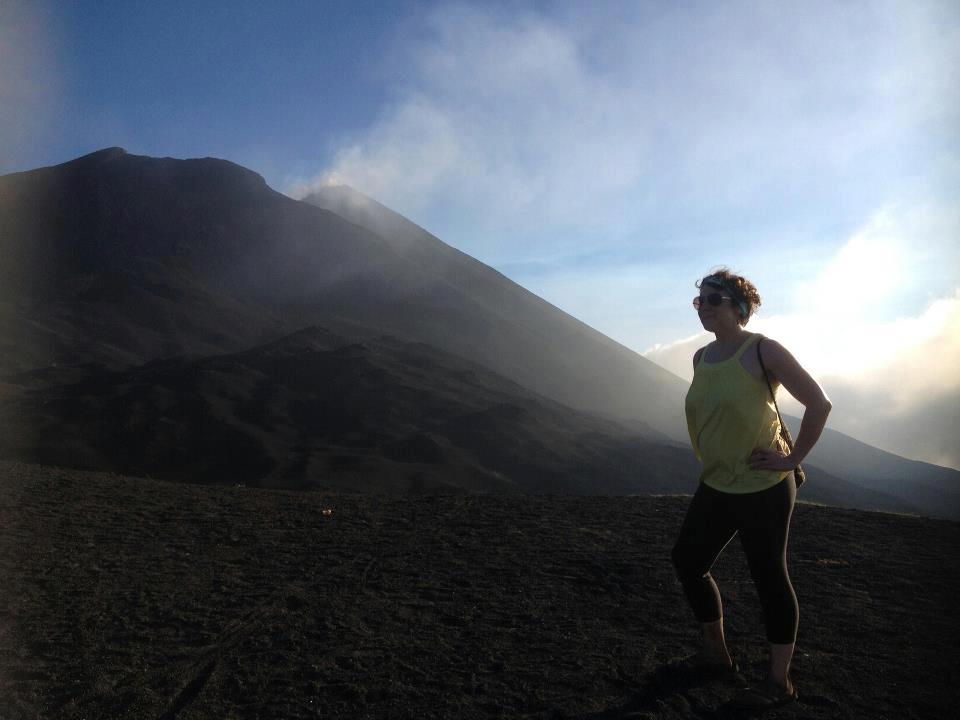
Pacaya Volcano, Guatemala

If you set it up right, freelancing can be a fulfilling career giving you the freedom to do what you want when you want, but that comes with a price tag. You have to be your own boss which means making sure you set work hours, take vacations, and get paid what you deserve. Here are a few dos and don’ts to help you out.

Do have a website and write a blog. If you have a personal website and blog, you are published, and you have a portfolio to show others what you do whether that is web design, creative writing, or photography.

Don’t ever do work for free. Several people will trick you into doing work for free even well known magazines and companies under the guise of “helping to get your name out there” or “making sure you are a good fit.” Your work should never be free unless it is a personal labor of love. Freelancing is work, and you should be paid for it.

Do order some business cards. On Vistaprint, you can get your first batch free. You never know when you might meet with a future client.

Don’t limit your options. All your skills can be used in freelancing. The awesome thing about it is you can be whoever you want to be, and you will learn along the way what you are good at and what you are not, what you love to do and what you don’t. The best thing is you are in charge. You don’t need a degree to freelance, you just need to be good at what you do so that people want to work with you. So pick what you are good at and do it well.

Do read the fine print. A job may say you will make $20/hr, but then offer you contracted pay instead of hourly pay. Be careful to do the math and make sure it really equals up to $20/hr. It is always a good idea before a job to calculate the estimated amount of time it will take you to complete and then negotiate a fair price. At the very least, charge whatever the hourly minimum wage is where you live. If you are experienced, have a degree in your area of freelancing, and have a well developed portfolio, you should be making a livable, even potentially six figure annual income depending on the area of freelancing you are in.

Don’t take a freelance job without a contract. Make sure you will receive credit for what you do if this is important to you, make money that is worth the time and effort you will put into the job, and regain the rights to your work if the person does not fulfill their end of the bargain. Usually, you can regain your work as long as you do not receive payment from the client or refuse/return payment. Know your rights. Each client will have different rules. Make sure they are in writing.

Do work creatively on your own terms outside of your freelance jobs without the intention to make money. Doing so will keep you fresh. Join a community of fellow artists to encourage and challenge you. You can send your independent creative work and portfolio to companies and clients you admire outside of your regular bill paying jobs that can often be tedious. You never know when your dream publisher or business will take notice maybe hiring you on as a regular freelancer with better pay.

Don’t take rejection personally. Learn from it. Stay true to yourself but also be open to change. Outside perspectives are not necessarily correct, but they do help you see your project with new eyes allowing you to create something completely different that can often be better than what you or the client even thought possible.

Written by Beth Ann Nyssen

1 Comment

Filed under Digital Nomads, Motivation, Work and Business, Working Remotely

The Advantages of Wearing Many Hats: Nurse, Writer, and Question Mark

IMG_20130226_155031

Antigua, Guatemala

So what happens if you trade in your regular every day job for a digital nomad life and find having a computer or cell phone chained to you at the beach was not exactly what you had in mind?

First of all, you are not the only one. You might think being a digital nomad (in my case, doing freelance writing through oDesk in Honduras) is your ticket to freedom, but once you find yourself sitting in a cafe surrounded by tropical plants, so engrossed in your computer or cell phone you are not spending time with real people or enjoying your setting, you might need a reality check. As a freelance writer, it is difficult to make a livable wage in a western country. Several writers often are expected to do free work for the privilege of being published. A recent article in The Guardian highlighted this issue when author, Philip Hensher, brought to the public’s attention that he was asked to write an introduction to a book for free and refused to do so. This is why I do my writing from Honduras where my budget for living expenses, food, and adventures is $300-$400/month. That way, I do not feel I have to be a slave to my work, and I make enough to get by and have some fun while working only part-time. However, my current financial state doesn’t give me much cushion in case of an emergency or if I want to take a spontaneous trip with friends. While I could sit in front of a computer full time and definitely make enough to continue my travel life style and still live in Honduras, the truth is I do not want to be in front of a computer for more than 20 hours. I love writing, but the computer part is torture especially when you take those jobs you really despise just to make a few extra dollars.

So this is where my solution comes in. Be a digital nomad with many hats. Know that being a digital nomad is only a part of your ticket to freedom and having lots of skills that have nothing to do with computers is the other part. In my case, I have a nurse’s license, and I have recently decided to return to the states to work as a travel nurse for three months and fill up my bank account. I can make in one week as a nurse the money I make as a writer working full time for a month. You do the math.

Being a published writer has always been my dream, but now that I am a writer, I am finding I want to start focusing on my own work not on doing freelance work for others. While all my oDesk and other freelance jobs have given me great experience and put a long list of published items in my portfolio, somewhere along the way I stopped writing what I want to write and for less than what I believe my work is worth. So now I am taking a step back and working as a nurse to put a significant chunk of money in my account allowing me the freedom over the next year to only take freelance jobs I want and focus on taking the time to do my own writing, the kind that is not dictated by word count, money, and deadlines.

You don’t have to get lost in the making money part of your digital nomad lifestyle. You can take breaks and find other skills. Sometimes instead of working all year long, a little here, a little there, and trying to be your own boss (which trust me is complex), it is good to work in the system, live cheap, and save for a few months. This way you can dive back into the freelance world, but on your own terms, and to fund fun adventures as needed instead of to make ends meet.

Keep life interesting while adding to your skills. Learn a language if you are in a foreign country. Volunteer where you are at. In my case, I started volunteering with different organizations in Honduras, and before I knew it, I was learning new skills like fundraising, which helped my application jump out to a foundation in the UK I am currently working for. I love yoga, and the next skill on my list is to become a yoga instructor. The more skills you have, the more options you have. One of the best books I ever read to help me gain perspective and see myself as more than just a nurse was The Artist’s Way: A Spiritual Path to Higher Creativity by Julia Cameron. This three month book (in my case, it took a year) helps you to release your creative energy and find new hats to wear so that when you talk with people and they ask you what you do, you can reply, “What don’t I do?”

For the nurses and freelancers, be sure to follow my upcoming Remote Control posts on the 10 Alternative Nurse Careers that Allow You to Travel or Work Remotely and The Dos and Don’ts of Freelancing.

Written by: Beth Ann Nyssen

1 Comment

Filed under Digital Nomads, Finances and Budgeting, Location Independence, Technology, Work and Business, Working Remotely

The wandering digital nomad challenge: how to achieve a work-travel balance

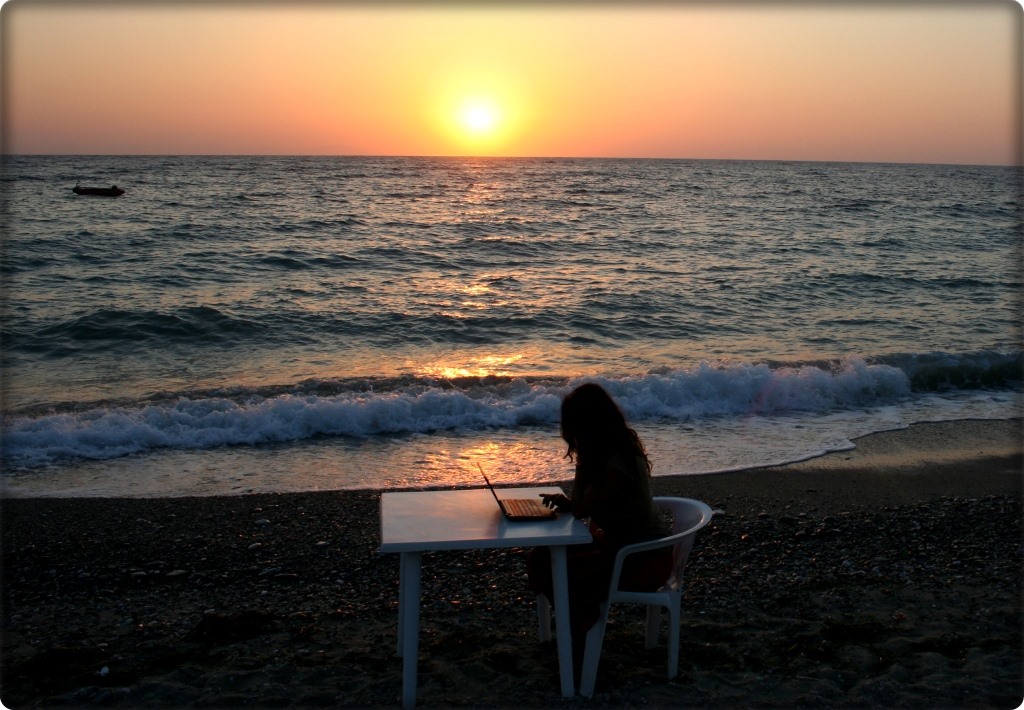
View from my desk in a campsite on the Albanian Coast. It's a hard life, I know...

View from my desk in a campsite on the Albanian Coast. It’s a hard life, I know…

‘How do you manage to work and travel simultaneously?’ is possibly my most oft-asked question. Whilst some digital nomads are indeed blissfully located somewhere, usually for an extended period of time, I am a member of a small group of challenged individuals who are actually located everywhere, all the time. My partner and I are currently riding our motorbikes from Germany to Australia; we’ve travelled through 15 countries in the last 15 months, lived in a tent most of the time and I’ve managed to write almost 500 travel-related articles along the way.

Challenging enough? You could say that…

Yes it is true that wandering digital nomads face a few more challenges than their more settled (and some would say sane) counterparts, yet finding a way to earn money whilst travelling is by no means an impossible task to accomplish.

If you’d like to know how I manage my own work-travel balance, and get a few ideas on how to tackle this challenge yourself, now would be the time to continue reading.

1)      Establish good working relationships

If you’re planning to become a self-employed digital-nomad, feel free to skip this point altogether. If your income will depend on others however, do take special note.

All digital nomads will spend a serious amount of time setting up a good virtual job before they start packing their bags. Most of the time, they won’t consider making the big move until they’ve secured their needed income. This is, suffice to say, an excellent choice.

Vagabonding digital nomads however, must also establish work contracts with people who understand that they are going to be constantly moving around. This turned out to be easier than I had anticipated, although I admit that the fact I only work within the travel niche may have something to do with it. Travellers dig travellers!

You can start off every month with the best intentions in the world, but let it be known that the life of a long-term traveller is one of complete and utter chaos. Most of the time. Finding a sympathetic ‘boss’ (or three) was my top priority before leaving, and something which I recommend you do as well. No matter who it is you work for, they must realize that whilst you’ll endeavour to deliver/contact/skype/email, sometimes you just won’t be able to, end of story. The internet will be down; you’ll be stuck in the middle of nowhere with a broken bike-part, you’ll be sick etc. This is why it is just so imperative that you build up a good reputation as a professional and conscientious worker and establishing a trusting relationship with your work provider. Should the inevitable happen, this will ensure the boss is not left disappointed and you are not left unemployed.

The fact that I also held a daytime job and learnt a new language during my pre-departure period is testament to the fact that…

2)     You should learn to be a multi-tasking-master

Juggling several balls simultaneously is what I do best and something with which I have the most experience. Before meeting Chris I’d worked as an overland tour guide for five years and mastered the skills of multi-tasking. After spending years answering 24,000 questions a day whilst making a mental food-shopping list and finding time for email answering, account keeping, problem solving, activities booking, mental-breakdown-preventing, leg shaving and travel itinerary researching… I knew I could do anything simultaneously 😀

Squeezing 27 hours out a 24 hour day is child’s play (once you get the hang of it) and a perfect skill to have when desiring to work and travel concurrently. The most important part of this talent is that teaches you what I call ‘mental multi-tasking’: the ability to switch your working and travelling brain on and off at will. This was by far my most challenging hurdle in the first few months; I needed at least two days to go from sightseeing and bush camping to writing a coherent enough travel article my boss would be willing to pay for! The process is getting easier and easier as the time passes and I have gotten to the point where I can go from spending five days crossing the Caucasus Mountain Range to churning out a decent amount of work, with just a good night’s sleep, a decent shower and a strong cup of coffee.

The good news here is that this is indeed a learned talent and something anyone can actively practice. Manage your work time efficiently and you won’t ‘waste’ a minute of your day.

3)     Find your groove & perfect your work routine

Whilst I may be a mental-ninja, I’m not superhuman, which means I can’t actually visit a historical site and write a travel article at the same time.

The options of work routine are various, so you may have to try out a few scenarios before you know what works best for you.

What I have managed to do is set up a completely imbalanced life balance which seems to work a treat for me: I travel most of the time and only work some of the time. I’ll stay put for a week in one spot with good internet and comfortable living quarters and work (at a campsite with a cosy cafe’, hostel or rental apartment), then travel for 3-4 weeks after that. Sometimes I also play it by ear and fit in a couple of working days when the weather sucks or if I happen to be in a particularly productive mood. This is also the reason I only accept monthly travel article requests; knowing ahead of time what I need to deliver in a month gives me the freedom to rearrange my days as I see fit.

I’ve known of digital nomads who travel and work on a 3 or 6-month-rotation basis and this may well turn out to be your preferred method. In the digital-nomad world, this is called ‘cycling’. It actually sounds perfect to me personally, yet my particular trip is so physically demanding (I’d never even ridden a motorbike before) that I really couldn’t travel non-stop for three months straight without a week-long break somewhere along the way. My work week has also become my rest & recuperation week. See? There’s that multi-tasking thingy again 😉

I plan my work-week about two months in advance and research what seems to be the ideal place to stop. A capital city, for example, will always be a good bet even in the most undeveloped countries; chances that you’ll find a decent place to stay with good Wi-Fi are surprisingly high the world over. This little plan has turned out to be ideal for me, because I don’t particularly like cities. Having to bunker down and work for a week straight in the big smoke is infinitely less painful than trying to do the same in a gloriously small beachside campsite on the southern Mediterranean coast in Greece in July. Now THAT was painful.

4)     Slow is key

When all is said and done, the only thing which will ensure your success as a wandering digital nomad is time. Give yourself lots of it; you’ll need it.

The only way Chris and I can manage to live as we do is because we travel so incredibly slowly. We cover only about 1,000kms a month and usually only visit a few places in each country. We’ll ride just a couple of hours each day and usually camp for a few nights in each spot. We tend to move faster during summer and spring and a little slower during the colder months, when bad weather can see us ‘stuck’ in one place for two weeks at a time, or more. When you’re a digital nomad you’ll never resent a rainy day on the road!

We are actually, for the first time in years, about to settle down for the winter in one single spot. I’ve recently been offered the amazing opportunity to write a long-term traveller’s guide book for a European publishing company and wish to do so from the comfort of a rental apartment in Tbilisi, Georgia. This will not only give me the chance to try ‘cycling’ for the first time ever, but it will also provide me with enough income should our intended crossing of Central Asia next year prove to be a tad work-challenging. I guess I’ll just have to wait and see how that pans out. Keep you posted!

You should realize by now that there is no such thing as an ‘ideal work-travel balance’ for nomadic digitalists…different strokes for different folks really is quite the apt adage in this case. Find your own grove, routine and balance and, most importantly, remember to love what you do.

Manage this…and you’ll always find a way to make it work.

Written by Laura Pattara 

1 Comment

Filed under Digital Nomads, Travel Tips, Working Remotely

Making the Decision to Go Remote | Location Independence [Video]

Research shows we put more weight into how we may later regret a decision than we actually do if it ends up being a bad choice.

More importantly, we regret NOT making decisions to do things above all else.

In other words…DO IT.

Subscribe to the RCTRL YouTube Channel: http://www.youtube.com/remotecontrolnoel


Leave a comment

Filed under Location Independence, Motivation, The Decision, Videos

Breakaway…how to free yourself from those invisible shackles

Breaking free from my previous life was not easy...but boy was it worth it :)

Breaking free from my previous life was not easy…but boy was it worth it 🙂

The decision has been made. You’ve spent months (sometimes years) debating with your soul about what it is, exactly, that you want from life. Once you’ve finally realized that breaking free is your ultimate goal, you think all your problems are over. That’s it! The hard part is over! You’ve made the decision to cut the shackles which are holding you back and to set off into the sunset; oh how wonderful do you feel right now?!?

Forgetting something? Not so fast there cowgirl…

Yes it is true that the hardest part, for me personally, was coming to the realization and making the final decision, that long-term travel was what I craved most. Yet this does not mean by any stretch of the imagination, that what came next was pure bliss. It wasn’t. It was a bit hellish actually. I had an apartment to sell and the contents to store, I had to disconnect from everything in my life, hand in my resignation, pay off my credit card, close all my accounts and, if all that wasn’t enough, I had to break the news to my mum. Once you learn my mum is Italian, then you’ll understand my angst ^_^

Handing over the keys of my former abode to the real estate agent felt like a huge relief. Sort of. You see, everything about the ‘breakaway’ was immensely contrasting for me: I was elated yet hesitant, adventurous yet cautious. Nothing about it was black and white and, to tell the honest truth, nothing has been ever since. I love travelling with every inch of my soul but at times I get homesick, friend-sick and mamma-food-sick. Whilst I cherish making new friends every day I miss having D&Ms with my life-long friends. I dare say that life for most long-term nomads is one of contrasts and contradictions, so I suppose the internal turmoil I felt when I was in the midst of reorganizing my life  was Mother Nature’s way of telling me ‘well you better get used to that kid…there’s a lot more where that came from!’

Being virtually homeless at the age of 31 felt a little scary although having a 3m³ storage space full of my ‘stuff’ helped alleviate my fears. This was my back up plan, my fall-guy, this was my way of saying that while I very much wanted ‘out’, I did also want to leave the door ajar. Just in case.

Considering that the next time I saw my stuff was when I flew home three years later to sell it all off, one would think that I’d be an ardent advocate for complete and total initial sell-off. But I’m not. Sure, sometimes I kick myself at having spent $6,000 over three years to store things I never needed nor wanted again, but I do think my gradual detachment from what I sometimes call my ‘previous life’ was exactly the right recipe for me. I’ve had people ask me how one just breaks away completely and sets off, but fact is I have no idea how anyone could do that either! I did it in steps and it worked a treat and this is something I would highly recommend to anyone who feels a little nauseous at the mere thought of ridding themselves of their life-long’s possessions. I can plead and beg and swear to you that you won’t give two hoots about them in two years time, but fact is everyone needs to get there on their own.

I left my car with a friend who paid and maintained it whilst she used it (sold that two years later), consolidated all my accounts into one and took a debit VISA card with me (incidentally this is still the only bank account I have) and I did take out an emergency MasterCard for the unthinkable. Knowing that I could buy a flight home at ANYtime helped put my mind at ease.

Those who are intending to live an expat existence in another country will probably have an easier time I dare say, but of course cutting off from the emotional attachments in our lives will always be the biggest challenge. It really does help to keep in mind that, this being the 21st century and all, one can get back ‘home’ in two days from just about every corner of the globe. Your chosen financial step of choice (do you live off your savings a while, make virtual connection before you leave etc?) will also determine just how nervous you’ll be at the airport, yet I imagine that even the most organized wannabe-nomad will suffer many sleepless nights.

Taking all the necessary steps you need to free yourself from your restrictions is never going to be the easy part. Emerging from the other side unscathed however, will definitely be the most rewarding.

Welcome to your new life.

Written by Laura Pattara

2 Comments

Filed under Digital Nomads, Location Independence, Motivation, The Breakaway, Working Remotely