Category Archives: Digital Nomads

What Every Digital Nomad Should Know First About RV Life

The open road has always promised freedom, but in today’s digitized world, that freedom comes with a hotspot. More professionals are embracing the nomadic RV lifestyle, lured by the ability to work from anywhere and trade cramped city apartments for ever-changing views. But swapping a desk chair for a captain’s seat isn’t as breezy as it sounds. From connectivity surprises to campground politics, there’s more to this mobile life than Instagram suggests.

Always Map Around Your Wi-Fi, Not Just Your Views

Chasing sunsets is poetic, but chasing bars of signal is practical. Remote work means deadlines don’t pause for nature, and not every picturesque overlook comes with stable internet. Reliable service providers often vary dramatically by region, so flexibility and research are non-negotiable. Smart nomads use coverage maps, booster gear, and know that sometimes a lesser view wins because it keeps the Zoom calls from freezing.

Plan Less Like a Vacationer, More Like a Local

Too many treat full-time RVing like a never-ending road trip—and quickly burn out. The secret isn’t in nonstop sightseeing, but in finding rhythms. Spend longer stints in fewer places, dig into small town routines, and leave space for slow mornings and midweek errands. Those who find a local coffee shop, a grocery loop, and a walking path tend to feel more grounded and less like drifters.

Build Skills Without Hitting Pause on Life

Earning a degree online opens doors without requiring you to walk away from your current life. With a flexible online IT degree program, it’s easier than ever to hold down a full-time job while staying on track with your studies. These programs are designed for working professionals, offering both structure and freedom in equal measure. Whether you’re diving into information technology, cybersecurity, or systems analysis, the right IT degree builds practical, career-aligned skills that employers are actively seeking.

Rethink Productivity Without a Door to Close

No one warns about the toll shared square footage takes on focus. A rolling home-office hybrid means reimagining boundaries, especially when living with a partner or pet. Noise-canceling headphones help, but so does crafting zones—a fold-out desk here, a mobile stand there. Even the front seat, swiveled around and reclaimed, becomes an unlikely haven for concentration.

Campground Culture Is Its Own Learning Curve

Digital nomads often stumble when romantic ideas clash with campground realities. Reservations vanish during peak season, neighbors get chatty fast, and generator etiquette is surprisingly complex. Tensions over noise, space, or dogs arise quickly if expectations aren’t clear. Those who observe first, ask questions, and learn the unspoken codes of campground living save themselves plenty of awkward encounters.

Maintenance Will Become Your Side Hustle

Life on the move means things break, rattle loose, or stop working at the worst possible moment. YouTube tutorials can only go so far when the water pump fails or solar wiring shorts out. Regular maintenance becomes a near-daily ritual—tightening, taping, checking levels, and learning what that new hum might mean. Accepting this early helps frame maintenance not as a burden, but as the admission price for freedom.

You’ll Have to Protect Your Routine Like It’s Sacred

Routines can disappear quickly when the world outside changes every few days. That’s why the digital nomads who thrive tend to stick to core rituals—morning stretches beside the RV, timed breaks, structured work blocks, and regular meals. Without these, days blur and motivation dips. But routines aren’t about rigidity; they’re scaffolding for flexibility.

Choose Your Travel Companions Like You’d Choose Business Partners

The wrong co-pilot can turn the dream into a pressure cooker. Living in close quarters demands emotional intelligence, communication, and shared expectations. Splitting tasks, creating alone time, and syncing work hours become essential to harmony. Whether it’s a partner, friend, or even a dog, compatibility isn’t just nice—it’s survival.

Hitting the road in an RV to live and work isn’t the same as vanishing into a vacation postcard. It’s a life of trade-offs, adaptation, and occasional dust in your laptop’s keyboard. But with the right mindset and some trial-by-fire wisdom, the journey opens up a lifestyle that defies the nine-to-five mold. When the office view is a mountain range and the commute is a walk around a lake, most nomads agree: the extra planning is a small price to pay.

Image via Pexels

Unlock the potential of remote work and digital nomadism with expert insights and resources from Remote Control — your gateway to thriving beyond traditional office walls!
Leave a comment

Filed under Digital Nomads

Mental Health is Important, Wherever You Are

Virtual Mental Health Resources List

Taking care of your mental health is vital for your overall health and well-being. Unfortunately, accessing therapy and mental health counseling is not as easy for everyone as it is for some, particularly for people with limited mobility, inadequate health insurance, or limited financial means.

In the past, working remotely would also often make it difficult to connect with mental health support. Today, many online resources are available if you’re going through a mental health rough patch. Below are some of the most helpful virtual resources for dealing with mental health issues. 

National Suicide Prevention Lifeline

People experiencing depression, suicidal thoughts, or other emotional distress can find a range of services available via the 988 Suicide & Crisis Lifeline. You can use the virtual chat option available on the website, or call or text 988 for professional support, which is available 24/7, in both English and Spanish, across the United States. 

The website also offers a glossary of terms related to suicide prevention and mental health issues, as well as several testimonials from people who have experienced addiction, trauma, depression, and suicidal thoughts. 

Mental Health America

Mental Health America (MHA) is America’s leading nonprofit promoting mental health and well-being. MHA’s main goal is to advocate for closing the mental health equity gap while increasing nationwide awareness through public education, direct services, and research. 

People who need help can take a mental health test, find local mental health professionals, or access crisis resources on the MHA website. 

Substance Abuse and Mental Health Services Administration

The Substance Abuse and Mental Health Services Administration (SAMHSA) is the agency within the U.S. Department of Health and Human Services that leads public health efforts to improve the behavioral health of U.S. citizens. 

SAMHSA offers a variety of helpful services such as FindTreatment.gov, where people with mental health and substance use disorders can find nearby treatment centers, including those offering free and low-cost treatment.

The Trevor Project

Focused on suicide prevention among LGBTQ youth, The Trevor Project offers several virtual resources. Trained counselors are available 24/7 via chat or phone through the TrevorLifeline. The organization also provides an online social networking community called TrevorSpace for LGBTQ young people and allies. 

Resources like Trevor’s public speaking program and LGBTQ-inclusive curriculum can also be accessed on the website. 

U.S. Department of Veterans Affairs

Military veterans can access many mental health services through the Department of Veterans Affairs (VA), including the Veterans Crisis Line, which connects former service members to caring, qualified responders. This confidential hotline is available by phone, online chat, or text. 

The VA website is also a great source of information on mental health conditions such as post-traumatic stress disorder (PTSD), support groups for vets, and a locator to find local VA facilities.  

Depression and Bipolar Support Alliance

The Depression and Bipolar Support Alliance (DBSA) facilitates in-person and online support groups for people living with mood disorders. Website visitors can find educational materials, wellness tools, and more. 

DBSA chapters and support groups offer peer-run support groups so that people can share experiences, discuss coping skills, and offer one another hope. All online support groups are free of charge at DBSA. 

Whether you or a loved one are in crisis, seeking community support, or simply want to learn more, this list provides a small sample of the many virtual mental health resources available. 

Author Bio

Kent Reason is an editor and content specialist with Ark Behavioral Health, a substance use treatment provider with locations in Massachusetts and Ohio. Ark offers an array of services for addiction and mental health, including multiple levels of care and evidence-based treatment options.

Leave a comment

Filed under Digital Nomads, Mental Health, Work and Business

Taking Your Business on the Road

Taking Your Business on the Road

If you’re considering the idea of starting a new business or relocating your current one to a new city, there are many factors to consider before making the decision. Spend some time asking yourself why you want to start or relocate your business. It’s important to know what you want and what your goals are for your future company.

Remote Control is a great resource for business owners and digital nomads to stay informed about life and work on the move. Through shared experiences, tips, tricks, and hopefully a little humor, we hope to inspire you to follow your bliss.

What City Is Best for Your Type of Business

Before deciding on where to start or relocate, it’s important to look at the market of that city, what kind of industry you’re in, how much competition there will be, and how much money you’ll need upfront. It’s also helpful if you already know someone who has started a business in that area before or has any connections there. 

You should already have a firm idea about what type of business you want to start or relocate. For example, if you want to start a restaurant it is best to look for cities with large populations that are underserved by restaurants. If you want to open a tech startup, it might be best to look for cities that have thriving tech scenes with access to venture capital and talent pools.

How you structure your business can help you when it comes to protecting your personal assets. An LLC will offer that, as well as being easy to set up yourself. Though you won’t need an attorney, you will need to check what the rules are in your new home since they vary from state to state. 

Funding for Your Business

The next step would be figuring out how much funding you need for your new endeavor and how much funding is available in your desired city. 

Grants are awarded to businesses with a great idea that will provide a public benefit or meet an unmet need. You can apply for grant money through the government, your state’s department of commerce, and other nonprofit organizations.

Loans come in many shapes and sizes, from SBA loans to bank loans to peer-to-peer lending. They’re all designed for different purposes and at different rates of interest. The key is finding a loan that fits your needs best.

Equity investments are the most difficult type of capital because you have to give up some ownership in your company in exchange for the funds you need

Crowdfunding is the practice of raising money for your business through small donations and investments from many people. It usually means you’ll ask people on social media or through an online platform like Kickstarter or GoFundMe for money in return for an incentive like a t-shirt or preorder.

Life in Your New City

If you are moving to a new city for business purposes, there are some things that you should consider before making the move. For instance, if you have children, you will need to consider their school and social life before making the move. Do some research into the cost of living in that city, too, since it can vary wildly across the country. Is there anything that you would miss from your old city and whether or not those things might be available in the new one?

Can you afford a home in an area you want to live in that will be best for your family? If you enjoy the fast-paced city life, can you afford a home in that city? If you and your family enjoy spending a lot of time outdoors, are those homes within your financial reach? 

There is home purchase down payment help for first-time homeowners and people who have already bought and sold one or more homes. This comes in the way of down payment assistance programs. This is especially helpful for families who have just paid for a move and a business start-up. Thanks to federal, state, and local programs, you may have options from several grants, loans, tax credits, and other programs available to you. 

Moving to a new city to begin an exciting business venture is the stuff of dreams. And asking the right questions early, like ‘will my business be well suited to the city?’ or ‘can I can get help to purchase the home I want when I get there?’ can set you up for great future success.

About the Author (Sarah Noel)
Sarah Noel and her boyfriend, both left corporate jobs to work as freelancers, chasing balance between the work they loved and the life they wanted. They’ve taught themselves how to work smarter, not harder. They’ve committed to separating work and home so that they can enjoy both. Now, with TaylorandNoel.com, they’re sharing their best practices with other freelancers, in hopes they can do the same.

Photo Credit: Peggy Anke

Leave a comment

Filed under Digital Nomads, Tips and Tricks, Work and Business, Working Remotely

How to Create a Home Office Space for Remote Work

With the increasing capabilities of internet connectivity, more and more people are embracing remote work and the digital nomad lifestyle. To optimize productivity, you can set up an office space in your home, even with limited living space. Start by considering these easy tips.

Visit Remote Control for tips and resources on how you can work or run your business remotely. 

Designate a Well-Lit Area

Your priority choice for an office should be the area of your living space with the best natural lighting. Research shows that access to natural light while working improves mood, mental health, and overall well-being. This can be a corner in the living room with windows or a space in the kitchen. Choose the area that gets the most light for the longest part of the day. For example, if you prefer to work in the early morning, choose an area facing the sunrise.

Use Functional Furniture and Fixtures

Ergonomic furniture is a major trend in office decor, and using functional furniture doesn’t mean you have to sacrifice your aesthetic. People who work in an office setting, even at home, sometimes deal with repetitive stress injuries. Ergonomic furniture, such as a desk, chair, or table, allows you to work without developing any injuries over time. You can typically find pieces to match the look and feel of your home as well.

Prioritize Climate Control and a Functional HVAC System

Ensuring your workspace is comfortable is an important element of optimizing productivity, and climate control is an easy way to alter how an area affects you. Have the HVAC system in your home checked for any noise issues or heating and cooling defects to ensure it is working properly. A loud unit can be a distraction, and this issue is typically a problem with the motor that you can easily fix. Find local HVAC contractors to come troubleshoot problems and get your comfort back on track.

Start Organized

Being disorganized is a common time waster when you work from home. It’s easy for things to get cluttered when you live in a small space. That is why the minimalist approach to storage and decor is the best way to optimize the space and get rid of unnecessary distractions. Start by organizing your work desk and removing anything that takes the focus from your job. Place all your stationery tools in desk drawers so they are out of view but within reach. Keeping sentimental items, such as photos, is a great way to decorate, but avoid putting them directly in front of you on the desk. Instead, designate a shelf elsewhere for such items.

Rethink Your Entire Living Space

When you simply cannot find the perfect spot, it may be time for a small home makeover. Move the couch to the darker area of the living room so you can take advantage of the light coming through the windows. Move your bedroom to the spare room closer to the street so you can turn the quieter room into your workspace. When all else fails, you can start thinking about getting rid of items to make space for your office.

Creating a definitive work space with a functioning HVAC system is the best way to keep yourself on track. If you lose motivation when things become too familiar, don’t be afraid to apply these tips to a new space in your home. Sometimes changing things up slightly can help you work more efficiently.

About the Author (Sarah Noel)
Sarah Noel and her boyfriend, both left corporate jobs to work as freelancers, chasing balance between the work they loved and the life they wanted. They’ve taught themselves how to work smarter, not harder. They’ve committed to separating work and home so that they can enjoy both. Now, with TaylorandNoel.com, they’re sharing their best practices with other freelancers, in hopes they can do the same.

Leave a comment

Filed under Digital Nomads, Tips and Tricks

The New Nomad Life

Image courtesy of Unsplash

The New Nomad Life

When you can work anywhere in the world. When you look at a map to plan your next commute to the office. When your laptop and smartphone are your coworkers, you may just be a digital nomad. With the whole world as your workspace, you’re left with only one decision—-where should I go? Remote Control has a few ideas.

Rohnert Park, California

A ninety-minute drive north of San Francisco, Rohnert Park, in south Sonoma County has everything a digital nomad like you could ask for. It is business-friendly and has an educated workforce, good schools, and affordable rents. Rohnert Park has both apartments and long and short-term housing rentals that are significantly lower in price than most other California cities and towns. From vineyards to redwood trees, this section of California is a nature lover’s heaven. Outdoor recreation in the many state and national parks, upscale and moderate restaurants, easy transportation, widely available high-speed internet, and lots of local color make this town one of the top destinations for today’s digital nomad. 

Chiang Mai, Thailand

This city is at the top of most lists in the digital nomad world. It’s got modern coworking spaces, a low cost of living, and lush jungle beauty with breathtaking temples. The cost of living in Chiang Mai is under a thousand dollars per month with rent. It’s a vibrant city and has all the amenities you could want. Culture Trip notes that Chiang Mai’s Old City is a popular place to live for many reasons, including the ability to travel the entire city by foot with restaurants, bars, and shopping easily accessible. Nimmanhaemin is where you’ll find most of your fellow digital nomads, the culture there is famous for Avante-Garde coffee shops, galleries, and some spectacular bars. 

Playa Del Carmen, Mexico

Another city that consistently tops the list of best places for digital nomads, you’ll see very little of what you’d normally find in Mexico there. In fact, only a handful of people who live there were born in the country. With the Caribbean practically at your doorstep and a population of young professionals and artists, it offers all the comforts of home but with a far lower price tag. It has reliable and fast Wi-Fi and affordable coworking spaces. If you’re looking for a warm, beachy, upbeat city that’s affordable, this may be worth putting on your itinerary. 

Miami, Florida

An international hub in one of the most beautiful, temperate, and lively cities in the US, Digital Nomad World points out that Miami is fast becoming a favorite for digital nomads from all over the globe. An above-average educated workforce of multilingual professionals and a diverse culture makes for an exciting mix of people to network with. Add in world-class restaurants and entertainment and it presents a very exciting place to live, too. North Miami offers more affordable housing than South Beach while still being close to beaches. 

Digital Nomad Tips

Being a nomad doesn’t mean you aren’t still expected to follow the same business rules as more stationary entrepreneurs. If you structure your business as an LLC, your personal assets will be protected should your business finances fail. Appointing a registered agent as an LLC is strongly advised as they will receive all your legal documents while you may, at times, be out-of-pocket. First, learn how to start an LLC.

You’ll be constantly meeting new people and finding a place to print new business cards can be a hassle. Use a tool that allows you to create your own on the go. With the chance to choose how they look, you can create a design to suit your present surroundings with colors, fonts, and style. With loads of pre-made templates to choose from, you can create an elegant and attractive business card.  

The digital nomad may be the wave of the future for the new way we do business, but finding a place to put down roots, no matter how temporary, is still an important need we all have. 

About the Author (Sarah Noel)
Sarah Noel and her boyfriend, both left corporate jobs to work as freelancers, chasing balance between the work they loved and the life they wanted. They’ve taught themselves how to work smarter, not harder. They’ve committed to separating work and home so that they can enjoy both. Now, with TaylorandNoel.com, they’re sharing their best practices with other freelancers, in hopes they can do the same.

Leave a comment

Filed under Digital Nomads, Expats, Travel Tips

India Motorcycle Tours with Two Wheeled Expeditions

India Motorcycle Tours (Photo Copyright TWE)

Photo Copyright TWE

Ever since college, I’ve wanted to go to Nepal. It’s definitely a bucket list item and at this point it may be my wife and I going after the kids leave the house (which is fine by me). When we lived in San Francisco, I rode my Ducati Monster everywhere. I put 1,200 miles on it the first week I bought it. I love riding motorcycles.

I recently found out that an amazing group of people started running India motorcycle tours (as well as Nepal) through an outfit they call Two Wheeled Expeditions. I think it’s an incredible idea and looked into it a little more.

Along with having great experience with motorcycles and travel, a massive plus is how they approach capturing the experience. Personally, I suck at remembering to take photos, so the idea that TWE handles those details, professionally, is a huge plus. I know two of the staff through creative (ad)ventures, so I know that aspect of it will be super professional, that my memories of the expedition will be collected and presented in the best way possible.

Adventures are nothing without the stories that follow and the TWE site had enough to make me stoked about considering this as an add-on potential to an already existing trip. As you’ve noticed from videos long ago, trip stacking is a favorite strategy for getting more out of your travel. In fact, trip stacking has us back in the U.S. about 1-2 months out of the year, we end up seeing a lot of friends and family members while we’re there. I don’t know what our specific plans for Nepal will be, but the idea that we can make a trip there, then add a motorcycle tour in India (and/or Nepal) as part of the overall trip sounds absolutely perfect.

The best thing about being a digital nomad is choosing where you go, when you go, and how you get there. I haven’t met any on motorcycles (a few on bicycles), but riding a motorcycle is the ultimate freedom for traveling through a place at a decent speed, while feeling you are part of the surroundings. With Nepal and India on the list, experiencing them on two wheels sounds like a dream.

Leave a comment

Filed under Digital Nomads, India Motorcycle Tours

Featured in Forbes: Remote Control (Running Your Business From Anywhere)

Featured in Forbes

Noel, Featured in Forbes

I am humbled and thrilled to have been featured in a Forbes article about running my company remotely. I’ll save the specifics for the article itself, which can be found here, but suffice it to say that our move to Costa Rica has been wonderful on so many levels. Coupled with the fact that the year before our move was one of the most stressful and difficult in my life (except for the birth of my son, which was amazing), I now have a better work/life balance, literally everything is better, even through a family tragedy that took place while we were here.

My company, struggling through growing pains the year before we left, is thriving, showing 25% growth last year and on schedule to grow 50% this year. We’re approaching 2 years as a 4 day work week company, with a happy and hard working team.

Whatever move you’re looking to make in your life, whether it’s making your company remote, keeping your company in the same place, but working remotely yourself, or some other version of living the life you want, take additional steps in making that happen. In the words of the late, great, Wayne Dyer:

“Go for it now. The future is promised to no one.”


Leave a comment

Filed under Digital Nomads, Expats, Location Independence, Motivation, Working Remotely

Remote Working, Distributed Teams and Bali

Remote_Office_photo

Image Copyright Evan Lovely – Flickr


A quick post about a few recent articles that came across my radar, both are definitely worth a read. More and more companies are seeing the benefits of distributed teams, through cost savings and the ability to hire great people without requiring them to uproot their lives. Plenty of people have reasons for staying where they are: family, school, jobs of a partner, etc.

If you’re considering a location independent lifestyle, time is on your side, the business world is moving in this direction. Why not make the move now and start living the life you want to live. We’re only here for a short while. Forget the commute, the stress of getting to work every day.

I see a lot of “view from the office” photos promoting digital nomadism. Many of them show an umbrella drink in hand, which I believe paints an incorrect picture of what it takes to make this work. You don’t wake up and start the day with a margarita in your normal job (maybe you do, but that’s none of my business). My point is that behind every digital nomad umbrella drink photo, there is a person who hustles every day to keep their dream alive. Those that don’t hustle, don’t last. The hustle is real when you have beautiful beaches and friends asking you to surf every day.

This is not to say you should make the leap to this new way of living only to be shacked up in an AC office and never enjoying your surroundings. Reframe the way you look at work and you can reap the benefits most people dream of. More people and companies are reframing what success looks like in the real world and I am consistently in awe of and applauding the Buffer team’s moves in shaking up the ideologies of what it is to be a successful start up.

Sidenote: I’m loving my life in Costa Rica, but Bali is looking pretty damn good after the piece below. 😉

Articles…

Buffer ditches its offices to go 100% remote, startups should too

Why working from the beach in Bali is the new cool

I wouldn’t change my digital nomad life for anything: Jacob Laukaitis


Leave a comment

Filed under Digital Nomads, Motivation, Working Remotely

Tips for Crossing the Costa Rica/Panama Border with Children and a Car

luis_border

Tips for Crossing the Costa Rica/Panama Border with Children and a Car

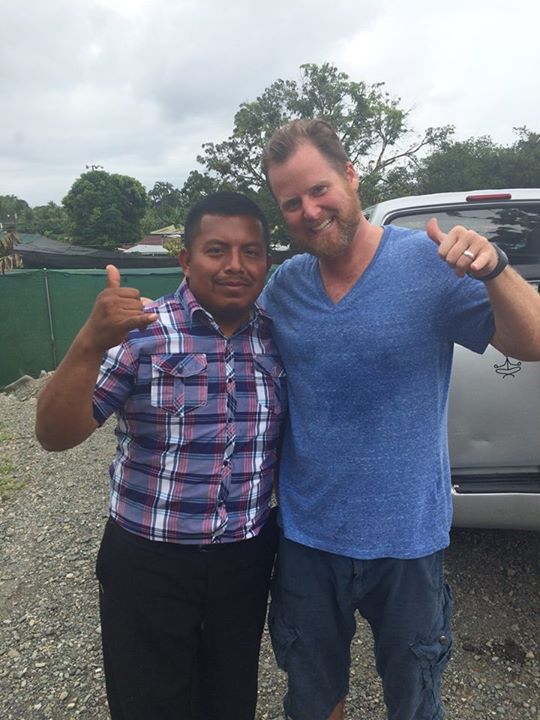
This is Luis. Luis is a hustler. He helps confused gringos with too many bags cross the Panama/Costa Rica border. His only tools are a pen, mobile phone and people skills. I love meeting people like Luis because he reminds me that true entrepreneurial spirit isn’t about industry press, funding rounds, exit strategies, head count, taxes, etc. It’s about creating solutions to problems and busting your ass to make things happen. Thank you for being there when we needed you, Luis.

My family and I recently spent a two week trip in Bocas Del Toro, Panama. We have been traveling now for 53 days, to Mexico, U.S., Costa Rica, Panama and now we’re back in Costa Rica. With two kids and more luggage than we probably need (we spent Christmas with family in the U.S. and accumulated gifts), we wanted to drive our car south to the Panama border (Sixaola side) to get to Bocas. Traveling in a car means you don’t have to pack so neatly, so tightly. You have the opportunity to spend less mental effort in the traveling exercise. Here are some things I learned on our journey to and from the border.

1. Don’t take your car, it’s not worth it.
Unless you are traversing Latin America in your car, there is no reason to take it from Costa Rica to Panama. If you insist, here is an incredibly accurate way to do it, the photos are spot on and just remember you need to visit 5 offices. We were determined to do it, had our attorney do the appropriate paperwork (cost was $60 and two hours out of the way to meet him to pick it up after the initial meeting), I read up on getting the car to the ferry in Almirante, etc. All of that planning, time and money spent only to find out after visiting said offices, getting our car sprayed and spending about 2 hours in lines, than there is some new Panamanian law stating that a Costa Rican car can only come in if the person driving it is a Costa Rica Resident. Being that we’re 90 day border-jumping touristas, it didn’t matter that all paperwork had my name on it, all stamps, dotted i’s, t’s crossed, etc were in order, they wouldn’t let the car through. Luis spoke with someone who said we could come back later and they could help us out, but it was going to be a 3 hour wait and we were afraid that once we got the car into Panama, it would be difficult to get it out. So we parked it on the Costa Rica side in a parking lot (you can see it down the hill to the left if you walk out of the Costa Rica immigration office, $9/day). We rented a taxi/bus for our family of 4 for $40 from Sixaola to Almirante, but I know this can be cheaper if you share a bus with others and don’t have the bags we have. We travel alot, but our experiences are not what I would call the “light and cheap” type. We don’t waste money either, but if spending it is necessary, we do it, which brings me to my next point.

2. Utilize assistance, but go with your gut on things.
Luis, pictured above, was a huge help, both ways. As a father, traveling internationally can be extremely stressful to ensure the safety of your family, make sure everyone is where you can see them and remaining calm when children are distracted by literally everything. Some people are ridiculously independent, others are paranoid they’re getting ripped off. There’s something empowering about trusting someone, letting them do what they do, for a fee, so you can focus on other important things, like “do you have visual on her?” comments with your wife about your daughter. I was skeptical at first, a small handful of people were willing to help, from showing us parking spots to watching our car. Luis walked up, said “I help people cross the border, if you need me, I can help.” Then he brought over 4 immigration slips for me to fill out, asked if I needed a pen, and gave us space. Not only did he show me to all 5 offices, when the 5th one didn’t work out, he walked me back to those where he knew I would get a refund for the taxes and insurance. On top of that, Luis was waiting for us in Almirante with a driver and bus to help us on our way back.

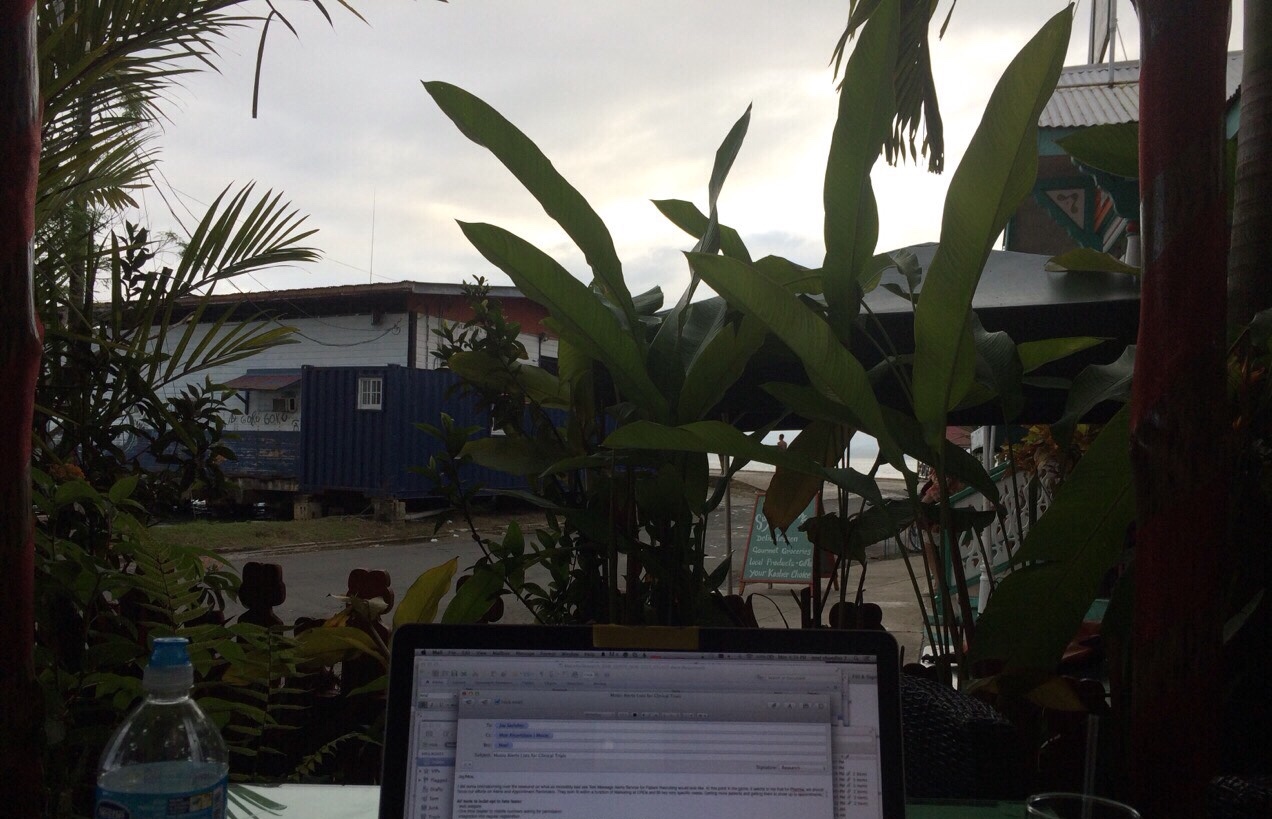
My office for two weeks in Bocas Del Toro

3. Include your children in the process.
Ticos love children, it’s a wonderful thing. Panamanians do as well, we found out. In a long line of faces trying to get their documentation stamped, a smiling and waving child saying “hola!” can do wonders for your processing time. Families can go to the front of the lines and aside from maybe 2 sighs from those in a hot line, none of the officials care. At immigration they need to see faces anyway, so bring your kids up first, have them say hello and then they can go back to doing whatever you need them to do to remain occupied.

4. If you’re working, take the day off on border crossing days.
This isn’t always a luxury and our plans got snafu’d when our kids got sick in Puerto Viejo and had to be taken to the clinic. Doctor’s orders were that we had to stay until Monday, which meant our plan of crossing on Saturday were foiled. I usually try not to do meetings on Mondays anyway, but sometimes you have to be on calls when clients can and want to do so. Even if you’ve crossed a border before, you have no idea how long things can take and there’s very little (nothing) you can do to speed things up. Having a phone call scheduled before or after means you are rushing the crossing at one point of the day or the other. Reduce your level of stress, take the day off, especially phone calls and if you absolutely have things you need to do, they can wait until you get to your destination.

TLDR; Don’t take your car, ask for help, use your children as ambassadors and take more days off. 🙂

Leave a comment

Filed under Digital Nomads, Life Hacks, Working Remotely

Enjoying the Antifragility of a Location Independent Lifestyle

Ian-Location-Independence

I suffer from a deep seeded, subconscious, feeling that tells me that I should be doing something that sucks to make money. I often feel guilty about the amazing life I’ve created through a location independent business that finds me walking down a beautiful Gold Coast foot path on a sunny tuesday afternoon checking out the bikini-clad ladies cruising by on roller-skates and skateboards. Totally, 100% first rate problems… but problems none the less.
 
Growing up I was instilled with a work ethic that involved getting up at 6:30 am and working outside in the cold dirt all day. We build houses and this intense work ethic still lays the foundation for the way I see the world. It’s taken lots of leadership courses and business success to get me to the point now where I can say to myself, “It’s ok to be here. Keep going.”
 
It’s not like I work less. To be honest, I work all the time… but work is like play to me now. My company makes internet radio programs. We’re not millionaires yet, but we live lifestyles that I imagine many millionaires would be envious of.
 
So when I’m walking down a beautiful Australian on a tuesday afternoon, watching girls in bikinis; I’m also listening and taking notes for important books that will improve my decision making in the future. Books like Antifragile by Nicholas Nassim Taleb.
 
Antifragile is exactly what a location independent life is all about. It’s answering the question, “how do I build a life that improves with chaos?” If I were kicked out of Australia tomorrow, my business wouldn’t be effected. If the US economy collapsed tomorrow, my business would hurt, but because I have clients all over the world, I would simply have to restructure things.
 
We’re moving from the Gold Coast to Costa Rica soon and I see no impact on business. I’ll be able to cut down on expenses and the time zone will be better for working with a few clients in New York. But aside from that, there will be no impact on the business. That’s the anti-fragility of a location independent business.
 
Ian Robinson is a entrepreneur world traveler. You can listen to his podcast at LoveAffairTravel.com or learn more about self improvement at IanRobinson.net.

Leave a comment

Filed under Digital Nomads, Location Independence