
Category Archives: Work and Business

Mental Health is Important, Wherever You Are

Virtual Mental Health Resources List

Taking care of your mental health is vital for your overall health and well-being. Unfortunately, accessing therapy and mental health counseling is not as easy for everyone as it is for some, particularly for people with limited mobility, inadequate health insurance, or limited financial means.

In the past, working remotely would also often make it difficult to connect with mental health support. Today, many online resources are available if you’re going through a mental health rough patch. Below are some of the most helpful virtual resources for dealing with mental health issues. 

National Suicide Prevention Lifeline

People experiencing depression, suicidal thoughts, or other emotional distress can find a range of services available via the 988 Suicide & Crisis Lifeline. You can use the virtual chat option available on the website, or call or text 988 for professional support, which is available 24/7, in both English and Spanish, across the United States. 

The website also offers a glossary of terms related to suicide prevention and mental health issues, as well as several testimonials from people who have experienced addiction, trauma, depression, and suicidal thoughts. 

Mental Health America

Mental Health America (MHA) is America’s leading nonprofit promoting mental health and well-being. MHA’s main goal is to advocate for closing the mental health equity gap while increasing nationwide awareness through public education, direct services, and research. 

People who need help can take a mental health test, find local mental health professionals, or access crisis resources on the MHA website. 

Substance Abuse and Mental Health Services Administration

The Substance Abuse and Mental Health Services Administration (SAMHSA) is the agency within the U.S. Department of Health and Human Services that leads public health efforts to improve the behavioral health of U.S. citizens. 

SAMHSA offers a variety of helpful services such as FindTreatment.gov, where people with mental health and substance use disorders can find nearby treatment centers, including those offering free and low-cost treatment.

The Trevor Project

Focused on suicide prevention among LGBTQ youth, The Trevor Project offers several virtual resources. Trained counselors are available 24/7 via chat or phone through the TrevorLifeline. The organization also provides an online social networking community called TrevorSpace for LGBTQ young people and allies. 

Resources like Trevor’s public speaking program and LGBTQ-inclusive curriculum can also be accessed on the website. 

U.S. Department of Veterans Affairs

Military veterans can access many mental health services through the Department of Veterans Affairs (VA), including the Veterans Crisis Line, which connects former service members to caring, qualified responders. This confidential hotline is available by phone, online chat, or text. 

The VA website is also a great source of information on mental health conditions such as post-traumatic stress disorder (PTSD), support groups for vets, and a locator to find local VA facilities.  

Depression and Bipolar Support Alliance

The Depression and Bipolar Support Alliance (DBSA) facilitates in-person and online support groups for people living with mood disorders. Website visitors can find educational materials, wellness tools, and more. 

DBSA chapters and support groups offer peer-run support groups so that people can share experiences, discuss coping skills, and offer one another hope. All online support groups are free of charge at DBSA. 

Whether you or a loved one are in crisis, seeking community support, or simply want to learn more, this list provides a small sample of the many virtual mental health resources available. 

Author Bio

Kent Reason is an editor and content specialist with Ark Behavioral Health, a substance use treatment provider with locations in Massachusetts and Ohio. Ark offers an array of services for addiction and mental health, including multiple levels of care and evidence-based treatment options.

Leave a comment

Filed under Digital Nomads, Mental Health, Work and Business

Taking Your Business on the Road

Taking Your Business on the Road

If you’re considering the idea of starting a new business or relocating your current one to a new city, there are many factors to consider before making the decision. Spend some time asking yourself why you want to start or relocate your business. It’s important to know what you want and what your goals are for your future company.

Remote Control is a great resource for business owners and digital nomads to stay informed about life and work on the move. Through shared experiences, tips, tricks, and hopefully a little humor, we hope to inspire you to follow your bliss.

What City Is Best for Your Type of Business

Before deciding on where to start or relocate, it’s important to look at the market of that city, what kind of industry you’re in, how much competition there will be, and how much money you’ll need upfront. It’s also helpful if you already know someone who has started a business in that area before or has any connections there. 

You should already have a firm idea about what type of business you want to start or relocate. For example, if you want to start a restaurant it is best to look for cities with large populations that are underserved by restaurants. If you want to open a tech startup, it might be best to look for cities that have thriving tech scenes with access to venture capital and talent pools.

How you structure your business can help you when it comes to protecting your personal assets. An LLC will offer that, as well as being easy to set up yourself. Though you won’t need an attorney, you will need to check what the rules are in your new home since they vary from state to state. 

Funding for Your Business

The next step would be figuring out how much funding you need for your new endeavor and how much funding is available in your desired city. 

Grants are awarded to businesses with a great idea that will provide a public benefit or meet an unmet need. You can apply for grant money through the government, your state’s department of commerce, and other nonprofit organizations.

Loans come in many shapes and sizes, from SBA loans to bank loans to peer-to-peer lending. They’re all designed for different purposes and at different rates of interest. The key is finding a loan that fits your needs best.

Equity investments are the most difficult type of capital because you have to give up some ownership in your company in exchange for the funds you need

Crowdfunding is the practice of raising money for your business through small donations and investments from many people. It usually means you’ll ask people on social media or through an online platform like Kickstarter or GoFundMe for money in return for an incentive like a t-shirt or preorder.

Life in Your New City

If you are moving to a new city for business purposes, there are some things that you should consider before making the move. For instance, if you have children, you will need to consider their school and social life before making the move. Do some research into the cost of living in that city, too, since it can vary wildly across the country. Is there anything that you would miss from your old city and whether or not those things might be available in the new one?

Can you afford a home in an area you want to live in that will be best for your family? If you enjoy the fast-paced city life, can you afford a home in that city? If you and your family enjoy spending a lot of time outdoors, are those homes within your financial reach? 

There is home purchase down payment help for first-time homeowners and people who have already bought and sold one or more homes. This comes in the way of down payment assistance programs. This is especially helpful for families who have just paid for a move and a business start-up. Thanks to federal, state, and local programs, you may have options from several grants, loans, tax credits, and other programs available to you. 

Moving to a new city to begin an exciting business venture is the stuff of dreams. And asking the right questions early, like ‘will my business be well suited to the city?’ or ‘can I can get help to purchase the home I want when I get there?’ can set you up for great future success.

About the Author (Sarah Noel)
Sarah Noel and her boyfriend, both left corporate jobs to work as freelancers, chasing balance between the work they loved and the life they wanted. They’ve taught themselves how to work smarter, not harder. They’ve committed to separating work and home so that they can enjoy both. Now, with TaylorandNoel.com, they’re sharing their best practices with other freelancers, in hopes they can do the same.

Photo Credit: Peggy Anke

Leave a comment

Filed under Digital Nomads, Tips and Tricks, Work and Business, Working Remotely

The Four Day Work Week (4DWW)

https://nadyneharts.wordpress.com/

Image: Nadyne Harts

This isn’t a post about the 4 Hour Work Week, best selling book by Lifestyle Design guru Tim Ferris that happens to be a big motivator to those in the Digital Nomad community. Nothing wrong with a 4HWW, but it’s a personal situation that involves outsourcing your work to other people who are working so you can be absent. The 4DWW is about sharing in that time off with employees so that everyone has a little more time to enjoy and live their lives.

4DWW: The Pilot

We recently started a 4DWW pilot program at my company. I shared my story (below) and the slide deck I presented from at the company meeting (our last Friday before starting) on Facebook. I got some incredible feedback in the comments, people asked me to post this online so others could see it. We’re not the first and PR wasn’t the goal. My sincere hope is that by sharing our experience, other companies will have the confidence to take the leap and give this a shot. We ARE out to prove that we can be a leading company in our space, highly competitive and continue serving our customers through the friendly support they’ve always had, while giving ourselves and families more time, which is truly our most valuable commodity.

Results (So Far)

One month in, I can honestly say it has been wonderful, but not necessarily easy. Any big shift in work requires change. Change in your mindset, processes and approach to your workload. Sundays are no longer “oh man, tomorrow is Monday”, they have turned to “I gotta get my list together, I have limited time to knock things out”, which I’ve found is a much better way to approach the week.

Here’s my story and the presentation:

“Today we started a 4 Day Work Week pilot program at Mosio. It’s something I’ve wanted to try for awhile now and we finally have the team, the traction and the systems in place to make it a success.

This move is very personal to me. I had a dark, horrible year in 2013, in the middle of difficult, but necessary changes at the company, and the death of my grandmother (Papa), my biggest entrepreneurial inspiration. For 5+ months I was working 60-70 hour weeks. Stressed, depressed, but chugging along, hoping for a light at the end of the tunnel.

I would work a full day, dinner with the family, kid in bed and then back to work until 1-2am, off to sleep/worry, only to do it again the next day with a baby on the way. At one point I told my wife “I would never do anything to hurt myself, but right now I don’t care if I live or die.” Seriously heavy shit. I kept telling myself “right the ship, then make the change”, that got me through it.

I know that many people in the world are literally working themselves sick. Chronic stress is linked to the 6 leading causes of death. 18% of US workers work 60 hours per week, some are barely making ends meet. I feel privileged we are able to offer this extra day per week to our team, our families and ourselves.

If you’re interested, here’s my presentation, the final slide has links to references we researched in making the move.

Noel”

4DWW Presentation (click the link to download)


Other 4DWW Companies:

Serps Invaders Introduce Four-Day Work Week

Treehouse: This Company Has A 4-Day Work Week, Pays Its Workers A Full Salary And Is Super Successful

A La Mode: OKC Real Estate Company Offers Unlimited Vacation, Four-Day Work Week


5 Comments

Filed under Life Hacks, Motivation, Tips and Tricks, Work and Business

The Dos and Don’ts of Freelancing

482790_715391577674_629059093_n

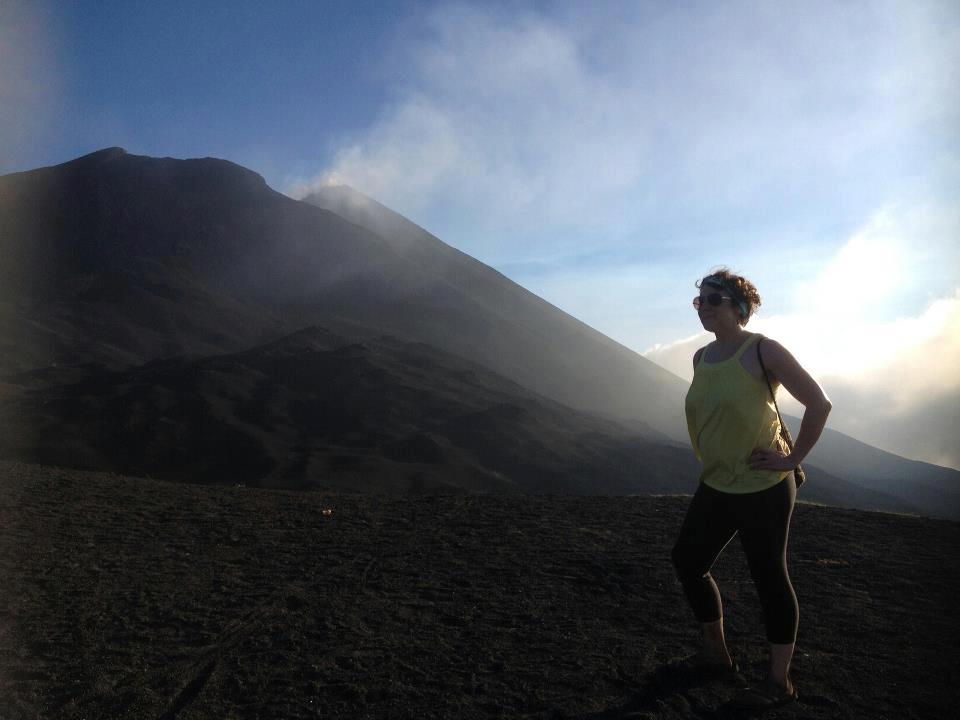
Pacaya Volcano, Guatemala

If you set it up right, freelancing can be a fulfilling career giving you the freedom to do what you want when you want, but that comes with a price tag. You have to be your own boss which means making sure you set work hours, take vacations, and get paid what you deserve. Here are a few dos and don’ts to help you out.

Do have a website and write a blog. If you have a personal website and blog, you are published, and you have a portfolio to show others what you do whether that is web design, creative writing, or photography.

Don’t ever do work for free. Several people will trick you into doing work for free even well known magazines and companies under the guise of “helping to get your name out there” or “making sure you are a good fit.” Your work should never be free unless it is a personal labor of love. Freelancing is work, and you should be paid for it.

Do order some business cards. On Vistaprint, you can get your first batch free. You never know when you might meet with a future client.

Don’t limit your options. All your skills can be used in freelancing. The awesome thing about it is you can be whoever you want to be, and you will learn along the way what you are good at and what you are not, what you love to do and what you don’t. The best thing is you are in charge. You don’t need a degree to freelance, you just need to be good at what you do so that people want to work with you. So pick what you are good at and do it well.

Do read the fine print. A job may say you will make $20/hr, but then offer you contracted pay instead of hourly pay. Be careful to do the math and make sure it really equals up to $20/hr. It is always a good idea before a job to calculate the estimated amount of time it will take you to complete and then negotiate a fair price. At the very least, charge whatever the hourly minimum wage is where you live. If you are experienced, have a degree in your area of freelancing, and have a well developed portfolio, you should be making a livable, even potentially six figure annual income depending on the area of freelancing you are in.

Don’t take a freelance job without a contract. Make sure you will receive credit for what you do if this is important to you, make money that is worth the time and effort you will put into the job, and regain the rights to your work if the person does not fulfill their end of the bargain. Usually, you can regain your work as long as you do not receive payment from the client or refuse/return payment. Know your rights. Each client will have different rules. Make sure they are in writing.

Do work creatively on your own terms outside of your freelance jobs without the intention to make money. Doing so will keep you fresh. Join a community of fellow artists to encourage and challenge you. You can send your independent creative work and portfolio to companies and clients you admire outside of your regular bill paying jobs that can often be tedious. You never know when your dream publisher or business will take notice maybe hiring you on as a regular freelancer with better pay.

Don’t take rejection personally. Learn from it. Stay true to yourself but also be open to change. Outside perspectives are not necessarily correct, but they do help you see your project with new eyes allowing you to create something completely different that can often be better than what you or the client even thought possible.

Written by Beth Ann Nyssen

1 Comment

Filed under Digital Nomads, Motivation, Work and Business, Working Remotely

10 Alternative Nurse Careers that Allow You to Travel or Work Remotely

Image

Australian Nurses Serving in Malaya/State Library of Victoria Collections/http://creativecommons.org/licenses/by/4.0/legalcode

~

Nursing allows you to work anywhere in the world. With so many options, the destination and length of commitment to a job is really up to you. Here are the top ten careers that will give you freedom to travel and work remotely.

Telehealth Nursing: As a telephone triage nurse, you can work from home or remotely assisting patients with health related phone calls and directing them to appropriate services. Pay is equivalent to hospital salary. Usually, a minimum of three years in acute care is required.

Travel Nursing (USA): As long as you receive a license for each state you want to go, you should be able to be placed there if you have had at least two years recent acute care experience. Most travel nurse contracts last three months. Agencies typically will reimburse for state licenses, moving costs, certifications, a furnished apartment, and health/dental insurance costs once you are placed in a hospital. Until you have an official job with a hospital, you are in no way bound to the agency you work through. It is beneficial to apply to several travel nurse agencies at the same time for this reason.

Travel Nursing (Developed Countries Outside of USA): Australia and New Zealand are the best bets for travel nursing outside of the states. Like travel agencies in the US, they will cover all costs once you have been placed in a hospital. Payment for nurses is equivalent to hospital nurses in the states. Other Western countries do not have as much of a demand for foreign nurses, and Europeans will typically hire within the European Union. Even spouses of native Europeans find it difficult to sift through all the visa and license paperwork required. After being in Australia or New Zealand, your chances of working in one of these countries will increase.

Travel Nursing (Other Countries): There are several organizations that work in other countries, but most are volunteer brigades. You will need to work with some of these first to put on your resume, but for paid work, Doctors Without Borders is one of the most respected. Contracts usually range from 6-9 months. The pay is descent, but much less than what you would make working in a developed country. Before applying, you should have travel nursing and acute hospital experience along with foreign language skills. Idealist.org lists several volunteer and paid international nurse opportunities through other organizations.

Medical Transcriptionist: Nurses are coveted in the transcriptionist world because they have had first hand experience with medical terms. Salaries vary and will possibly be half what you would make in a hospital, but this may be balanced by the ability to work from home or remotely.

Cruise Ship Nursing: As a contract nurse on a cruise, you receive free room and board and have set shifts allowing free time to be a tourist yourself. Contracts usually go for a few months, and then you will have the opportunity to renew. The pay is good and similar to what you would receive in a hospital setting.

Legal Nurse Consultant: This will require a Legal Nurse Consultant Certification (LNCC) and at least five years of hospital experience, but the pay is excellent, and consultations for medically related legal issues can be made via telephone or computer.

Medical Writer: Medical websites are searching for nurse experts to contribute to their blogs on health related topics to draw people to their sites. Pay will be poor in comparison to traditional nursing, but freedom may outweigh the loss.

Medical Sales Representative: Sales reps for medical supplies and pharmaceuticals make good money and often have the option to travel all over the world.

Full-time Nurse: There are several hospitals that will be willing to work with you if you have shown yourself of value. If you have been at your hospital several years, ask your manager if you can take a three or six month leave of absence to travel. They are more likely to accept if you are wanting to do some volunteer travel nursing in a third world country. While they may not be able to guarantee you a job on the same unit when you return, usually they will be happy to place you somewhere else within their hospital system knowing you are an experienced nurse who is familiar with their system. Training new personal can often be more expensive than just filling your position with on-call staff until you return.

Nurses are in high demand and make comfortable salaries making it easier to work from home or remotely, travel while working as a nurse, or work for a short period and save up to spend the rest of the year doing what you love. Contract nursing especially gives you incredible freedom to work where and when you want.

Written by Beth Ann Nyssen

1 Comment

Filed under Digital Nomads, Location Independence, Preparing to Breakaway, Technology, Travel Tips, Work and Business, Working Remotely

The Advantages of Wearing Many Hats: Nurse, Writer, and Question Mark

IMG_20130226_155031

Antigua, Guatemala

So what happens if you trade in your regular every day job for a digital nomad life and find having a computer or cell phone chained to you at the beach was not exactly what you had in mind?

First of all, you are not the only one. You might think being a digital nomad (in my case, doing freelance writing through oDesk in Honduras) is your ticket to freedom, but once you find yourself sitting in a cafe surrounded by tropical plants, so engrossed in your computer or cell phone you are not spending time with real people or enjoying your setting, you might need a reality check. As a freelance writer, it is difficult to make a livable wage in a western country. Several writers often are expected to do free work for the privilege of being published. A recent article in The Guardian highlighted this issue when author, Philip Hensher, brought to the public’s attention that he was asked to write an introduction to a book for free and refused to do so. This is why I do my writing from Honduras where my budget for living expenses, food, and adventures is $300-$400/month. That way, I do not feel I have to be a slave to my work, and I make enough to get by and have some fun while working only part-time. However, my current financial state doesn’t give me much cushion in case of an emergency or if I want to take a spontaneous trip with friends. While I could sit in front of a computer full time and definitely make enough to continue my travel life style and still live in Honduras, the truth is I do not want to be in front of a computer for more than 20 hours. I love writing, but the computer part is torture especially when you take those jobs you really despise just to make a few extra dollars.

So this is where my solution comes in. Be a digital nomad with many hats. Know that being a digital nomad is only a part of your ticket to freedom and having lots of skills that have nothing to do with computers is the other part. In my case, I have a nurse’s license, and I have recently decided to return to the states to work as a travel nurse for three months and fill up my bank account. I can make in one week as a nurse the money I make as a writer working full time for a month. You do the math.

Being a published writer has always been my dream, but now that I am a writer, I am finding I want to start focusing on my own work not on doing freelance work for others. While all my oDesk and other freelance jobs have given me great experience and put a long list of published items in my portfolio, somewhere along the way I stopped writing what I want to write and for less than what I believe my work is worth. So now I am taking a step back and working as a nurse to put a significant chunk of money in my account allowing me the freedom over the next year to only take freelance jobs I want and focus on taking the time to do my own writing, the kind that is not dictated by word count, money, and deadlines.

You don’t have to get lost in the making money part of your digital nomad lifestyle. You can take breaks and find other skills. Sometimes instead of working all year long, a little here, a little there, and trying to be your own boss (which trust me is complex), it is good to work in the system, live cheap, and save for a few months. This way you can dive back into the freelance world, but on your own terms, and to fund fun adventures as needed instead of to make ends meet.

Keep life interesting while adding to your skills. Learn a language if you are in a foreign country. Volunteer where you are at. In my case, I started volunteering with different organizations in Honduras, and before I knew it, I was learning new skills like fundraising, which helped my application jump out to a foundation in the UK I am currently working for. I love yoga, and the next skill on my list is to become a yoga instructor. The more skills you have, the more options you have. One of the best books I ever read to help me gain perspective and see myself as more than just a nurse was The Artist’s Way: A Spiritual Path to Higher Creativity by Julia Cameron. This three month book (in my case, it took a year) helps you to release your creative energy and find new hats to wear so that when you talk with people and they ask you what you do, you can reply, “What don’t I do?”

For the nurses and freelancers, be sure to follow my upcoming Remote Control posts on the 10 Alternative Nurse Careers that Allow You to Travel or Work Remotely and The Dos and Don’ts of Freelancing.

Written by: Beth Ann Nyssen

1 Comment

Filed under Digital Nomads, Finances and Budgeting, Location Independence, Technology, Work and Business, Working Remotely

[VIDEO] Finding Your Tempo: Ensuring High Work Output While Traveling | Tips for Location Independence

Quite a few people seem to feel like getting to the point of being remote is the most difficult part. If you’re not yet there, that makes perfect sense. The trick afterwards is maintaining high work output while being location independent, whether that is working from a home office, on the road or literally on the move during travel days.

Traveling can be stressful, as can work days. In this video I share a few tips I’ve learned to ensure I have high output during my travel days and am able to do so with minimal stress on me and my family.

Practice makes perfect and I used to be pretty worthless, work-wise, on travel days. Then I got to a point where I was able to get a lot done, but was pretty stressed out and in some cases miserable in the process. I’m far from an expert at it, there’s always room for improvement, but these tips have helped me along the way and I’ve gotten a lot better at playing the game. I hope you like the video and if you do, please subscribe to the Remote Control youtube channel!

Leave a comment

Filed under Digital Nomads, Life Hacks, Travel Tips, Videos, Work and Business, Working Remotely

How to get more out of your travel plans by Trip Stacking

After you’ve achieved location freedom, every trip is an opportunity to see more and do more while you are traveling. My wife and I recently turned a 3 day wedding weekend into a 2 week trip to Northern California.

In this video I share some pointers I learned the hard way in trying to stack another set of trips in an attempt to turn 8 days into 3.5 weeks. We still got 18 days out of it, so no complaints, but I spent a lot of work researching the wrong things only to find out all of our trip scenarios weren’t doable for all of the people we wanted to see. If sharing these videos helps others learn from my mistakes, I’ll keep making them. 🙂


Token: C4YF2S9JWZUB

Leave a comment

Filed under Life Hacks, Videos, Work and Business

The Do’s and Don’ts of Working Remotely

Cars stuck in a traffic jam

Avoiding the morning commute is a great part of my day

In the beginning, working from home is bliss. You set your own schedule, have a fantastic commute and the daytime soaps take the place of even the most chatty co-workers.

Richard Branson is a big supporter of telecommuting, working from his island in the Caribbean he believes “remote working is easier and more effective than ever.” Faced with endless perks, there are a couple of hazards you must learn to navigate. Follow our advice and you will be more productive than ever in your home office. Even if you only work remotely once a week, our tips will help you accomplish more and make sure you stay productive – even when no one is watching.

The ability to work from home has many advantages, but requires more self-discipline and motivation than a traditional office environment. To set yourself up for success this is what you need to do:

  • Have a workspace separate from your home, with minimal distractions. The TV isn’t turned on as background noise in a normal office, it shouldn’t be on in your home office either.

  • Create boundaries. Despite being at home, you have work to do. Your friends and family need to respect that, and they should limit any distractions while you are working.

  • Get ready for each day. Shower and change out of your pajamas. You never know when the boss will call on Skype, or your friends drop by unannounced.

  • Stay organised. Use to-do lists, calendars, apps on your phone. Whatever it takes for you to stay on top of your tasks and never miss a deadline.

  • Form a schedule, a semblance of routine office hours so that your colleagues, boss and your clients know when it is OK to contact you. Try to match this as close to normal business hours as possible, it makes it easier for everyone involved.

  • Having a schedule also stops you working too much, It’s important to take breaks throughout the day. Take time for a relaxing lunch break and get outside, if only for a short period of time. It will leave you refreshed once you begin work again.

  • Have a back-up plan. There will be days where the internet goes down, or for whatever reason you can’t work from your home office. Scope out a library of coffee shop you can work from as your plan B, or you could always just pop into your normal office.

  • Make the extra effort to stay in touch with your colleagues. Pick up the phone to speak to people, even if it’s not 100% work related. Use technology to help you here, Skype and instant messaging are great way to stay abreast of the latest office news without leaving your remote office. If there is a birthday or special event, make it a point to attend in person.

There are many hazards a telecommuter needs to learn to manage. More so than in a normal office, a remote worker has to look out for the following:

  • Don’t become a recluse. Just because you work from home doesn’t mean you’re not allowed to leave the house. The same goes for showering. Stay clean people!

  • Don’t ever lose touch with the people in your company. It’s easy to do, when you are not forced to interact in a lunch room or cafeteria. You need to work extra hard to maintain your relationships with colleagues while you work remotely.

  • Don’t take personal calls during work hours. Often family and friends think that since you are home you can catch up on your work later. Unfortunately this is not the case. You need to manage your close acquaintances expectations, and only return calls once your work is done.

  • Don’t do personal chores or errands while you are meant to be working. It will take twice as long to get your work done. Don’t tweet about it either, your boss is going to see you’re not working.

  • Don’t procrastinate and let the hours slip away. Create a routine you can stick to with a schedule that allows you be productive throughout the day.

  • Don’t work too much. Typically remote workers put in a lot extra time, its easy to fire up the laptop and spend another few hours working late into the night. You have a huge risk of burning out. Make sure your schedule makes sense.

These tips are a great start in being effective while working remotely. Follow them to the letter and you will be a very successful telecommuter. But if you’re anything like me, every now and then you need to throw caution to the wind. Go see a movie, take the afternoon off to enjoy the sun in the park, or dive into a book only to emerge hours later. The real joy in a flexible schedule is that you dictate when you need to work, and when you can afford to indulge in some spontaneous fun. Just don’t forget that an afternoon off might equate to staying up till 4am to meet that deadline.

But hey, that’s your call. The biggest perk of working remotely is being your own boss.

Author: Travis Bennett

Leave a comment

Filed under Motivation, Work and Business, Working Remotely

Location Freedom is the Primary Objective, Not Necessarily Digital Nomadism [VIDEO]

There is a lot of hype around the Digital Nomad lifestyle, definitely a good thing, but it isn’t for everyone. For most people, having location freedom would be life changing in the most positive way possible and they won’t need to be on the move all of the time. I spoke with a woman yesterday whose interest in the Remote Control Project was because she simply wants location independence to see her children more who live in 3 cities.

Learn how to work your existing job or business from anywhere in the world. Change your location, not your financial situation. Become a Remote Professional by establishing location freedom with your current income stream in tact and have the freedom to go and live wherever you want.

Leave a comment

Filed under Location Independence, Motivation, Videos, Work and Business, Working Remotely